By CELESTE M. HART
“I can’t do her justice. I can’t capture the feeling, There’s such a story behind the sadness, pain and the integrity. I was drawn into the face. It still bothers me,” said Linda Laisure, activist, painter, a site visitor with the H.O.M.E Foundation.
Laisure, in 2010, five years after the devastating Hurricane Katrina, ventured to the Lower Ninth Ward of New Orleans, where she discovered a portrait on the wall of a home to be demolished, located at 5438 N. Claiborne.
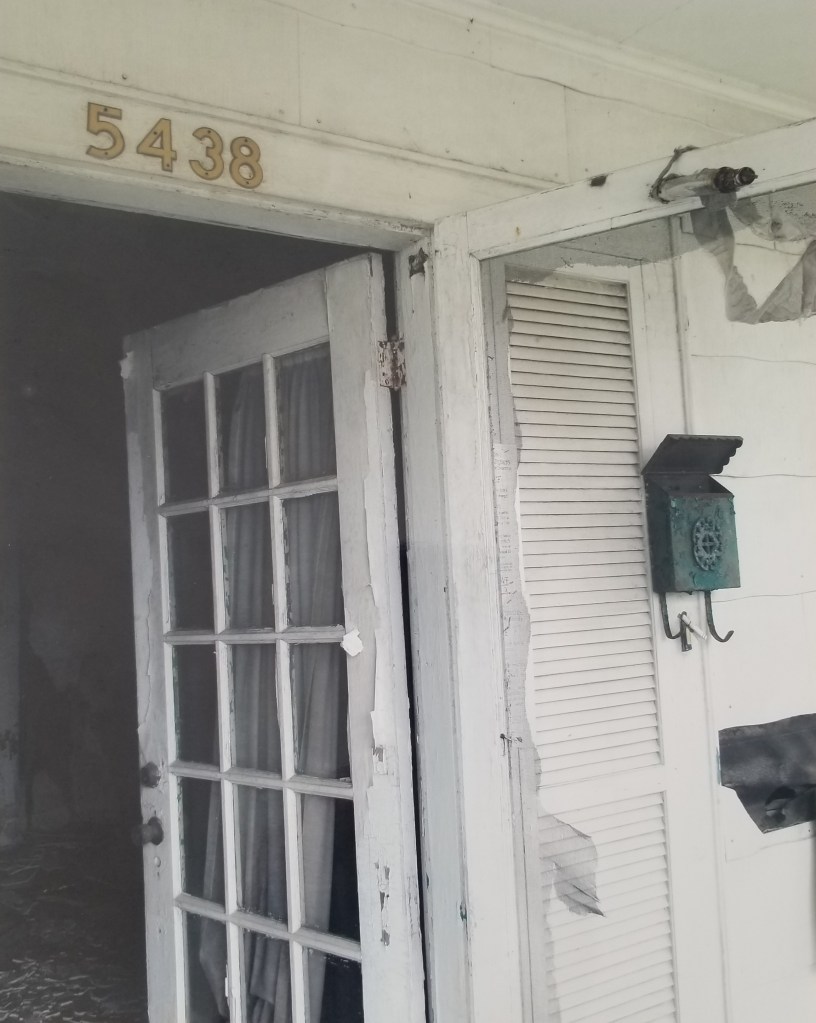

Linda Laisure
“I went back I could not see this beautiful photo be destroyed. It was the only thing left on the wall. It was so personal. I’m trying to get this to her relatives, for memory sake,” said Laisure.
Laisure, ventured to the New Orleans Department of Vital Records, discovered a name, Lucinda Rought, associated with the Claiborne address located in an area known as, ‘The Main Street of Black New Orleans’, according to the New Orleans Historical Society.
The Main Street of Black New Orleans
During Jim Crow era, Blacks forbidden to shop in white establishments, created the oak tree lined ‘Main Street’ that consisted of Black owned businesses including; life insurance, restaurants, tailors, dress shops, a grocery store, pharmacies, dentist, doctor, funeral homes, schools and jazz clubs. Freed slaves, the enslaved, West Africans, Indigenous people, and Caribbeans, possessed the highest percentage of Black home ownership in the Treme’ neighborhood, the oldest Black neighborhood in the United States, where HBCU Dillard University originated. Ninth Ward suffered the most destruction, entirely submerged by floodwater, when Katrina hit, August 29th, 2005, according to the Claiborne History Project.
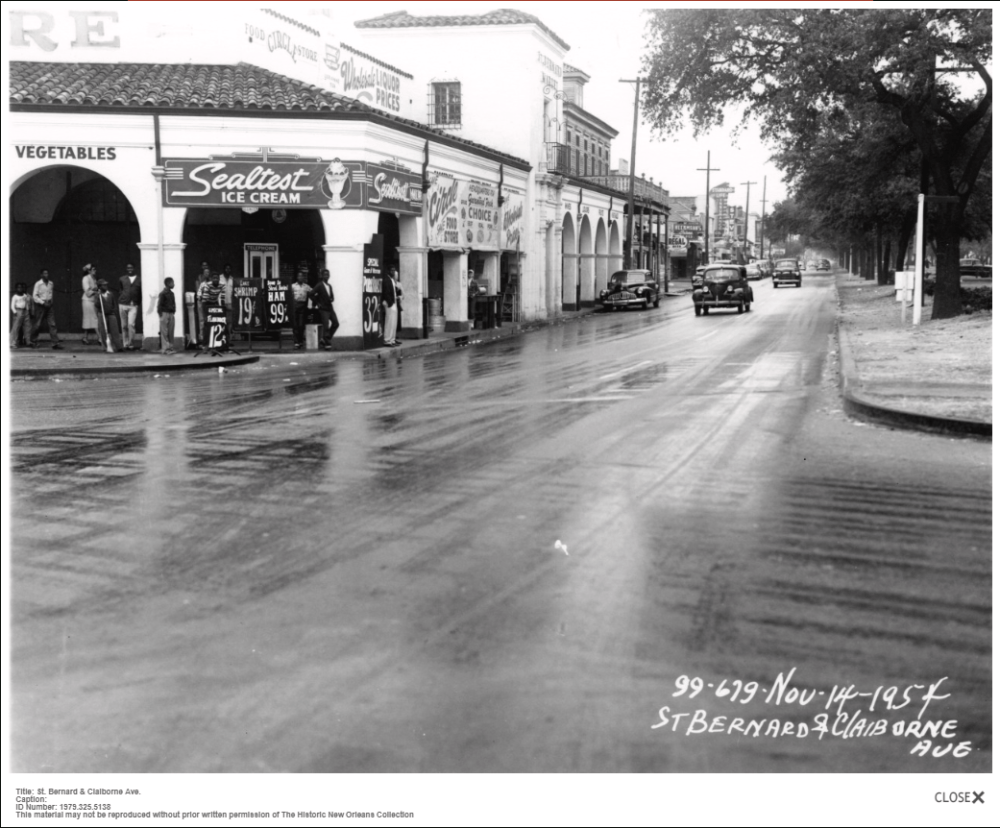
“This was where everything happened, where African Americans were welcomed and wanted,” said Raynard Sanders, co-founder of Claiborne Avenue History Project.
BLACK MARDI GRAS
Thousands of Black revelers crowded Claiborne Avenue during Mardi Gras. Founded in 1909, the Zulu krewe was created due to the carnival parades in the city being segregated. Inspired by a play about warriors in a Zulu village, in 1910 the Zulus appeared in their first carnival parade. The krewe uses balls, parties and social events to raise money for African Americans suffering financial hardships. One of their most well-known events is the Zulu Coronation Ball, known to locals as the Zulu Ball, which is held the Friday night before Mardi gras (Fat Tuesday). The ball is a black-tie, formal event and honors the coronation of the king and queen, according to Black Southern Belle, The History of Black Mardi Gras.
Mardi Gras Indian krewes have a Big Chief. The spectacular aspect of these particular krewes are the costumes worn, which are usually the wearers take on Native American regalia. Many suits are colorful and display folk art and cultural symbols. They wear elaborate costumes that honor both African and Native American ancestry as a way to commemorate their shared oppression.
:focal(1774x1318:1775x1319)/https://tf-cmsv2-smithsonianmag-media.s3.amazonaws.com/filer_public/2f/cd/2fcd3f01-ac5a-4702-9323-a8fd6a2694d6/super_sunday.jpg)
Native Americans were originally enslaved in Louisiana. Shortly after, enslaved Africans were brought to America during the transatlantic slave trade.
The Cultural Symbolism Iron Work in banisters, balconies and fences,
West Africans, historically known for iron working skills, known as blacksmiths, embedded messages into banisters and balconies that adorned homes, churches and businesses. Symbols of West Africa, called Adinkra, provided a way of speaking to their people. The symbol, Sankofa, represents the importance of learning from your past, other symbols represent the benefits of earth’s preservation, unity, hope, and ‘that which cannot be burned’. Two fires destroyed New Orleans, with its many wooden structures,1788 and 1794, France enslaved Africans to rebuild New Orleans. The Blacksmiths were forced to participate in the suppression of other Blacks, made handcuffs, shackles and jail bars. The metal structures still bear the marks of West African culture signifying ‘resistance to oppression’, Sidney Holmes, author The Untold Story of Black Blacksmiths.

Rought’s portrait currently hangs on Laisure’s wall, as she continues the search for family or friends.

“The pathetic reality is that we continue to ignore our past and the inequities of people of color and poor whites throughout the United States beginning with government broken treaties with Native Americans.,” said Laisure. “Thank God there are social service agencies, religious and non-religious and just folks that want to make a difference in a kinder and better world.”
Side note: Your Honor, a Hulu series, depicts life in the 9th Ward, interesting.
#Blackmardigras
 theovergroundpost
Thank you Celeste for your article. I hope we find a family member for this beautiful photograph.
LikeLike
We did get a lead, a response from the Claiborne History Project, let’s keep our fingers crossed!
LikeLike
I have personally seen this amazing picture. Linda is passionate about finding any family member of this lovely woman in the photo. Hopefully Celeste’s article will help move the search forward.
LikeLiked by 1 person
Bravo to my hearty-hearted friend, Linda Laisure!
LikeLike